Golpo
Photobooth installation created to share stories
Golpo is a physical installation that invites strangers to record and hear personal stories — a space for the kind of listening that exists between languages and across generations.
Timeline
1 semester
Roles
- Designer
- Fabricator
- Developer
Skills
- Physical computing
- Interaction design
- Fabrication
Tools
- Raspberry Pi
- React.js
- Figma
Artist Statement
We perform different versions of ourselves for every person we meet. With friends and family, and even some strangers, I'm talkative — but with my Bengali-speaking relatives, I often go quiet. Conversations on the phone are typically one-sided because I lost fluency somewhere during childhood.
At dawats (family functions), I've learned to exist differently. I still enjoy sitting around their conversations, listening to their stories. What started as a gap allowed me to strengthen this side of me — the side that listens.
Golpo in Bangla means “story.” In this installation, I turn the listening outwards, inviting others to share a story, and offering it to strangers to hear.
Installation
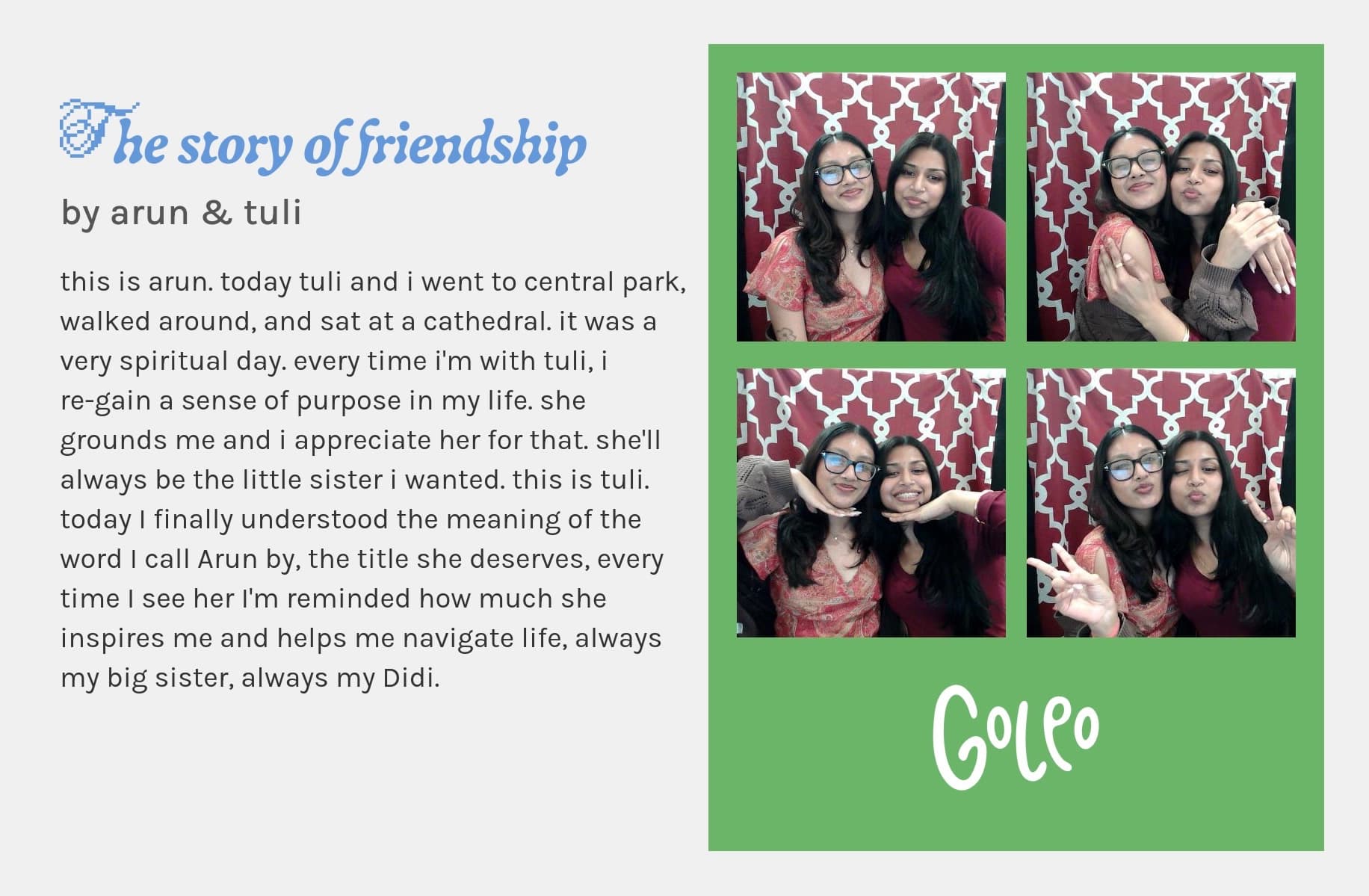
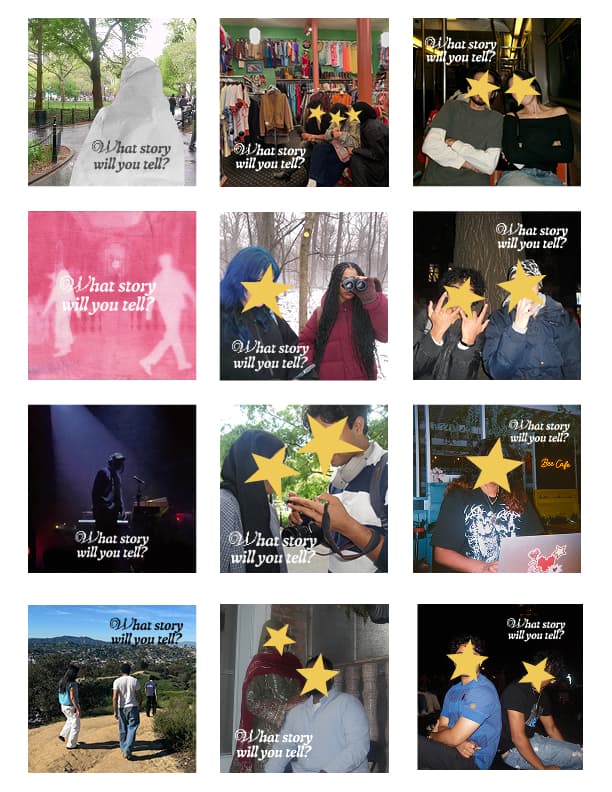
Example Print
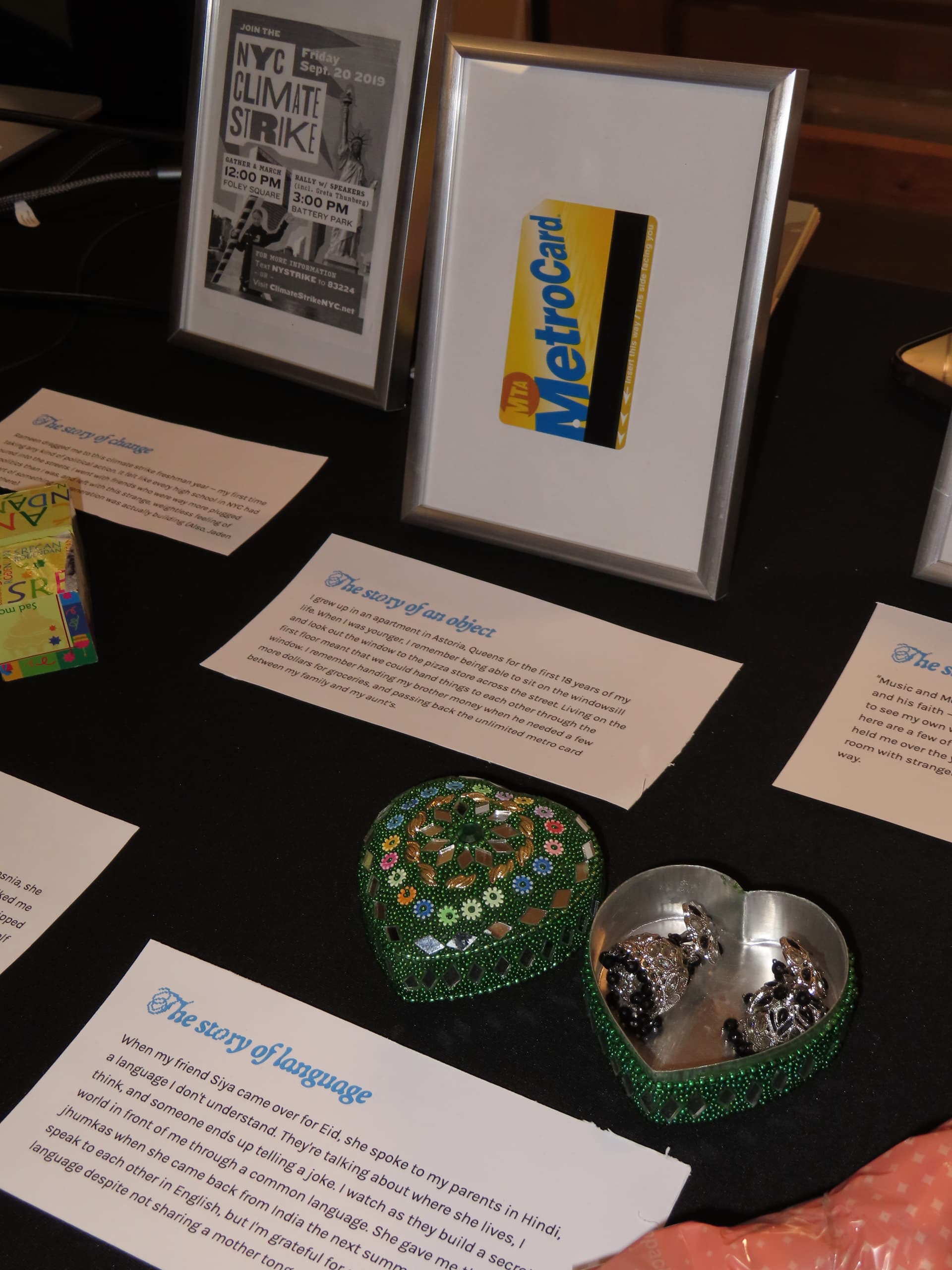
Additional Elements
Process
This project was inspired by my parents' immigration to the US. We didn't have much documentation of their lives before they came to America, so the only way to know them intimately was through the stories they told. It got me thinking about how important it is to document our faces as we create memories. Photobooths felt like a fitting way to explore this idea — the pictures are small, intimate mementos that capture a moment in time.
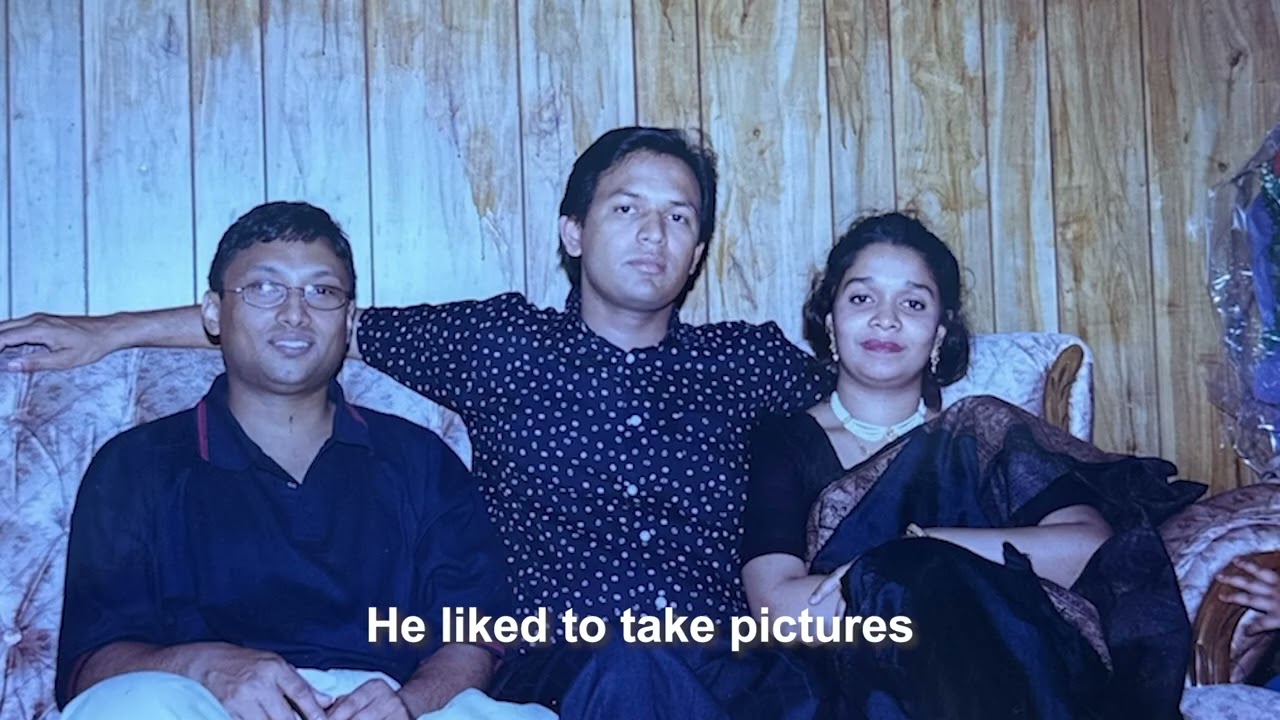
Family History: I explored an archive of my family history through photo albums and footage from our old Handycam. This inspired me to create a video introduction in which I spoke in Bangla about my family's relationship to documentation.
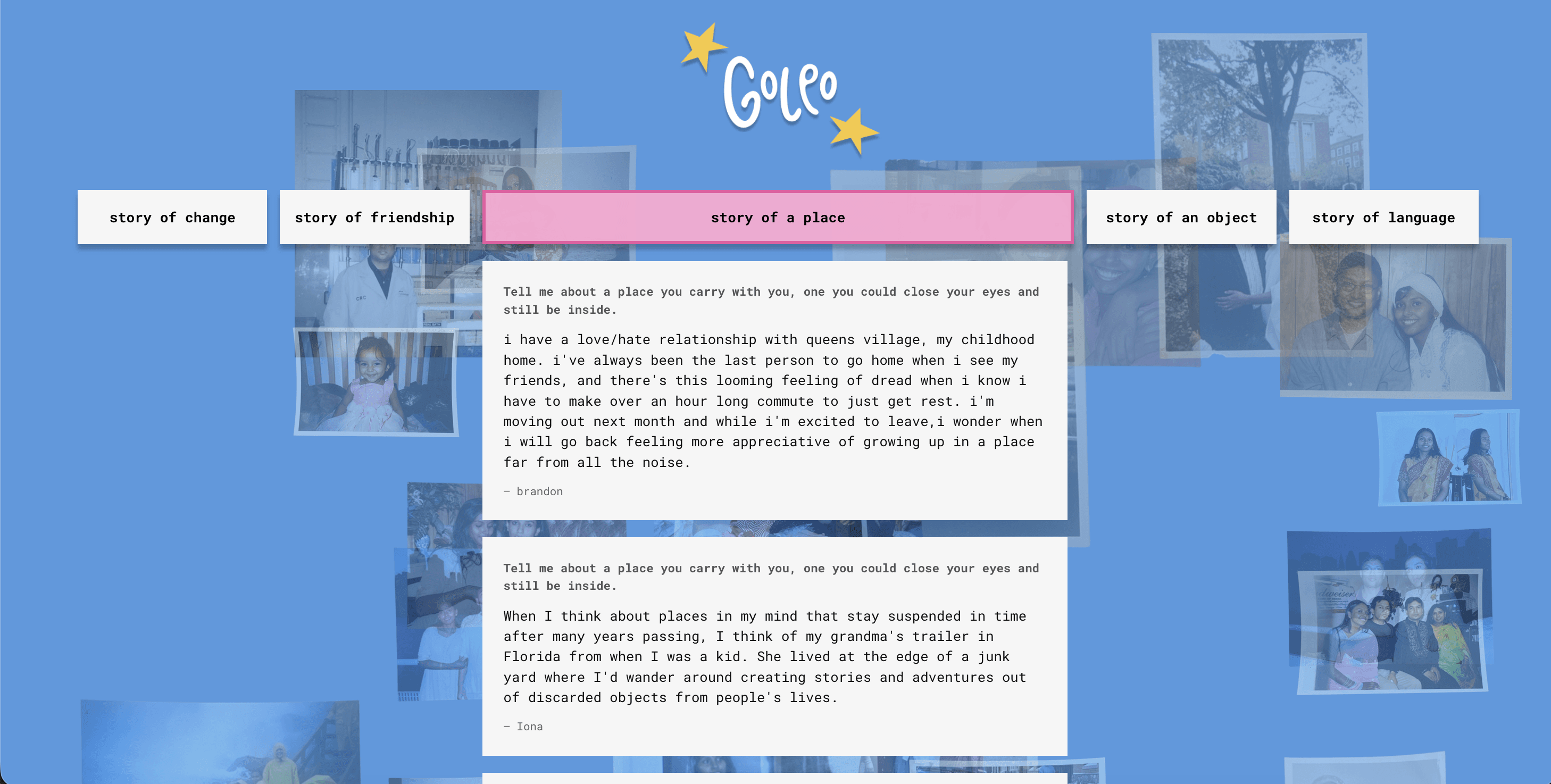
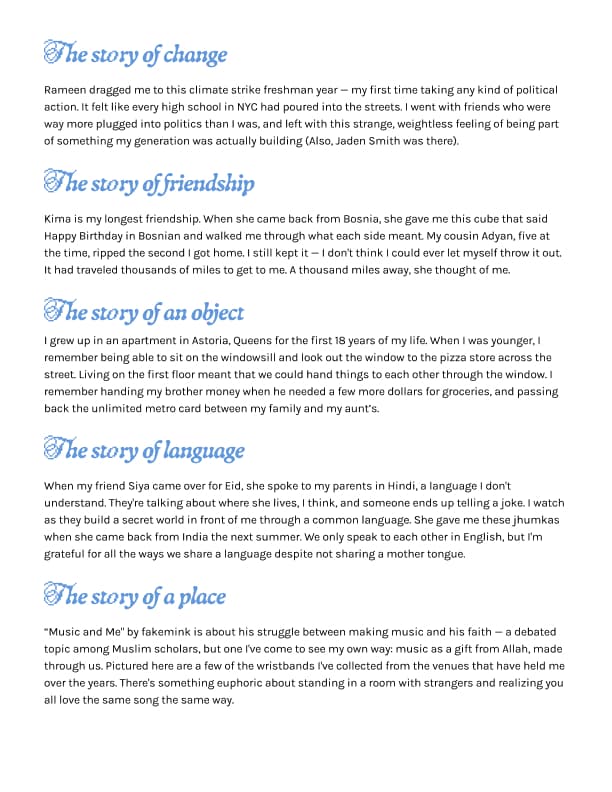
Prototyping the Prompts: I built a basic demo that asked users to write a story across five categories: (1) the story of an object, (2) the story of a language, (3) the story of a change, (4) the story of a friendship, and (5) the story of a place. Each one captures a slice of the memories that shape a person.
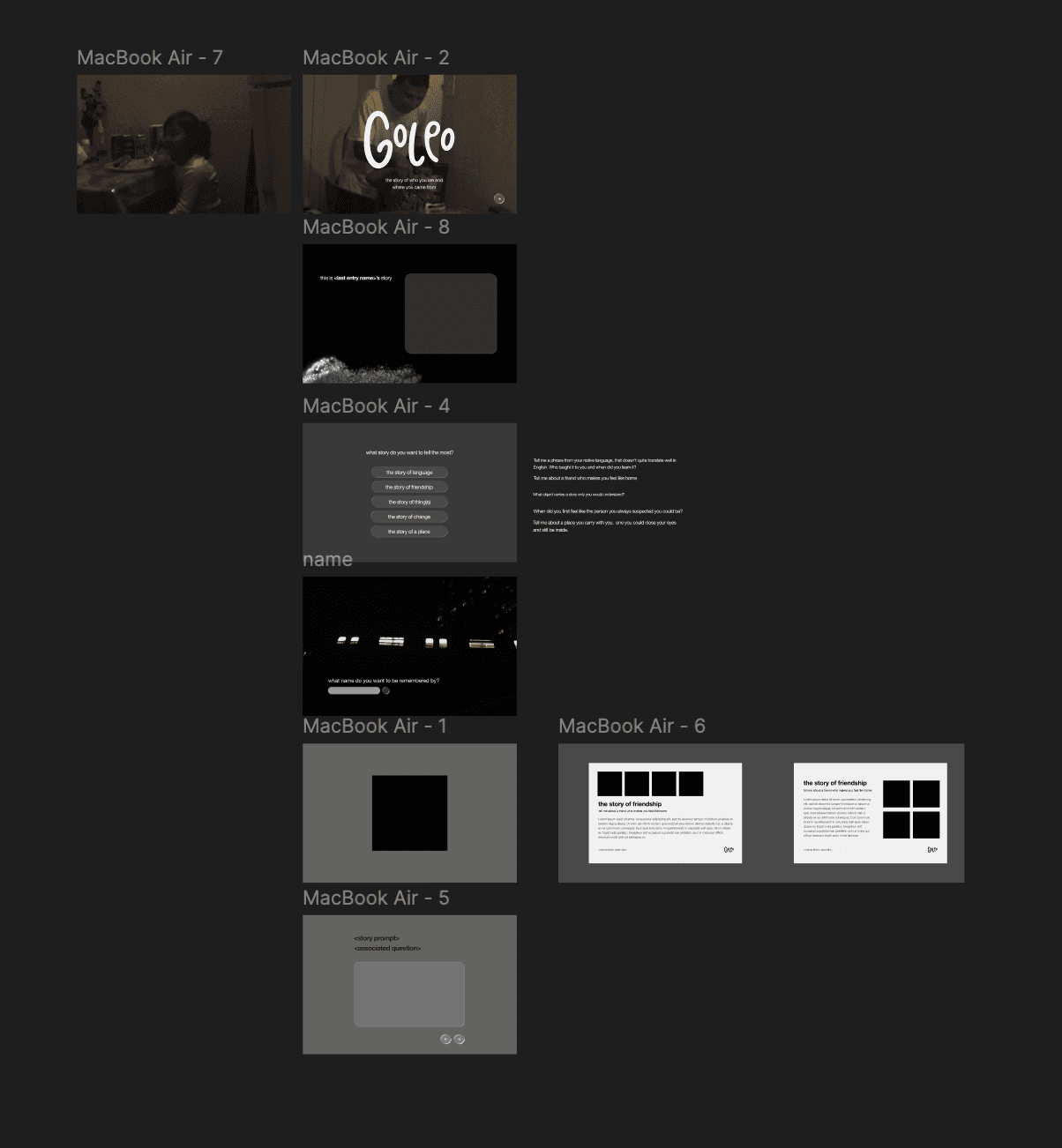
Experience Aesthetic: The themes were originally dark and sleek, but I shifted toward a more colorful, scrapbook-like vibe to better match the spirit of the project. I also swapped the typeface for something funkier and more artistic.
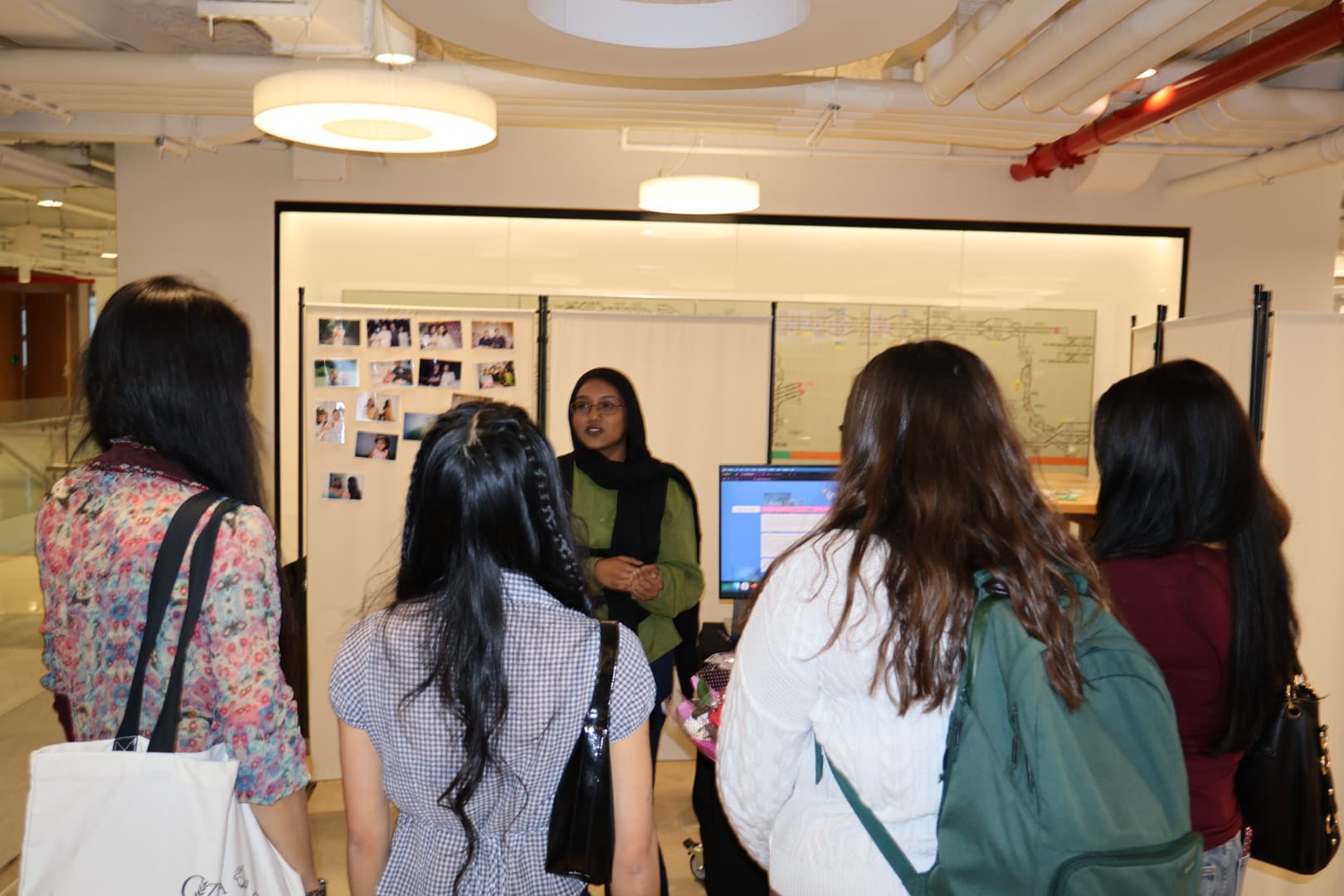
Fabrication: The booth itself was a monitor paired with a webcam and printer, surrounded by room dividers to create an intimate space. The entire experience was hooked onto a raspberry pi and ran with an older monitor which offered a retro feel.
Design Iterations
The visual language of the installation went through two major phases. Early designs leaned heavily on text; later iterations stripped back to emphasize the color and theme.
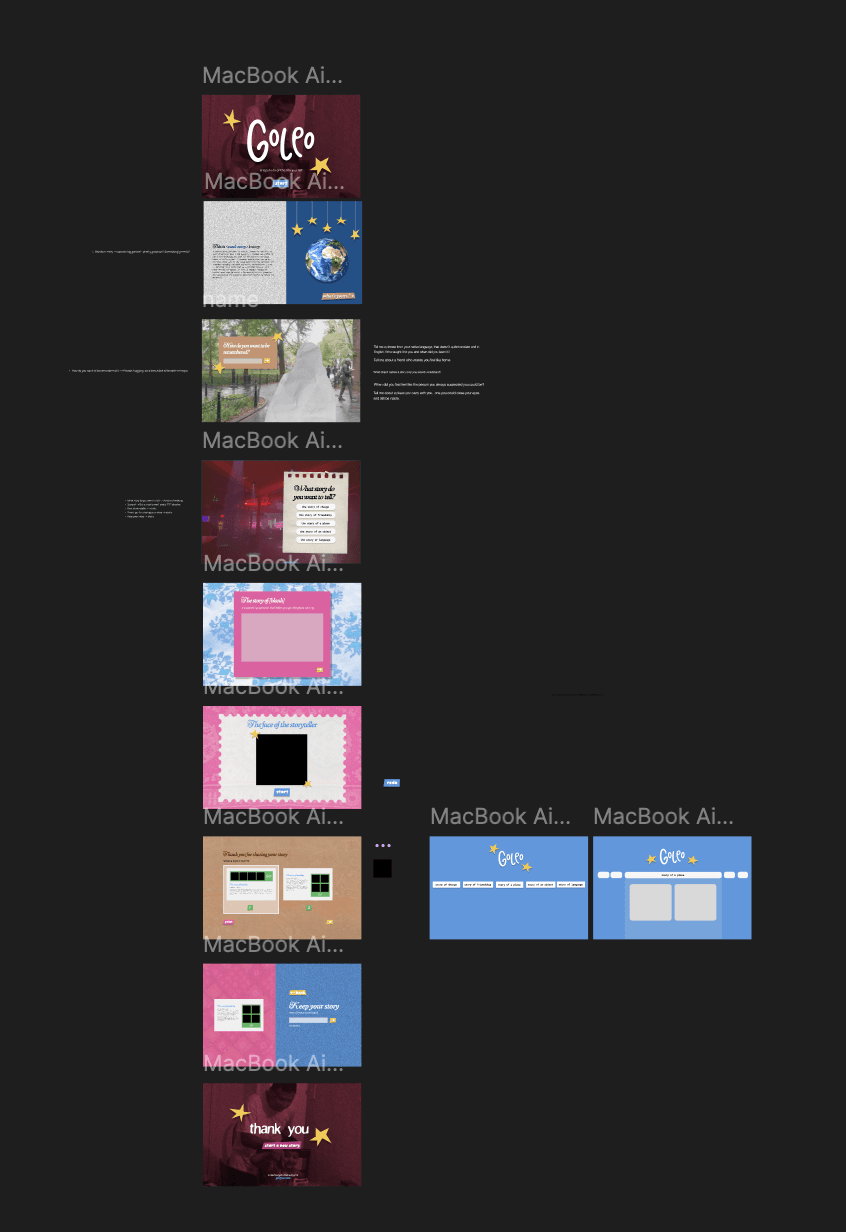
Panels
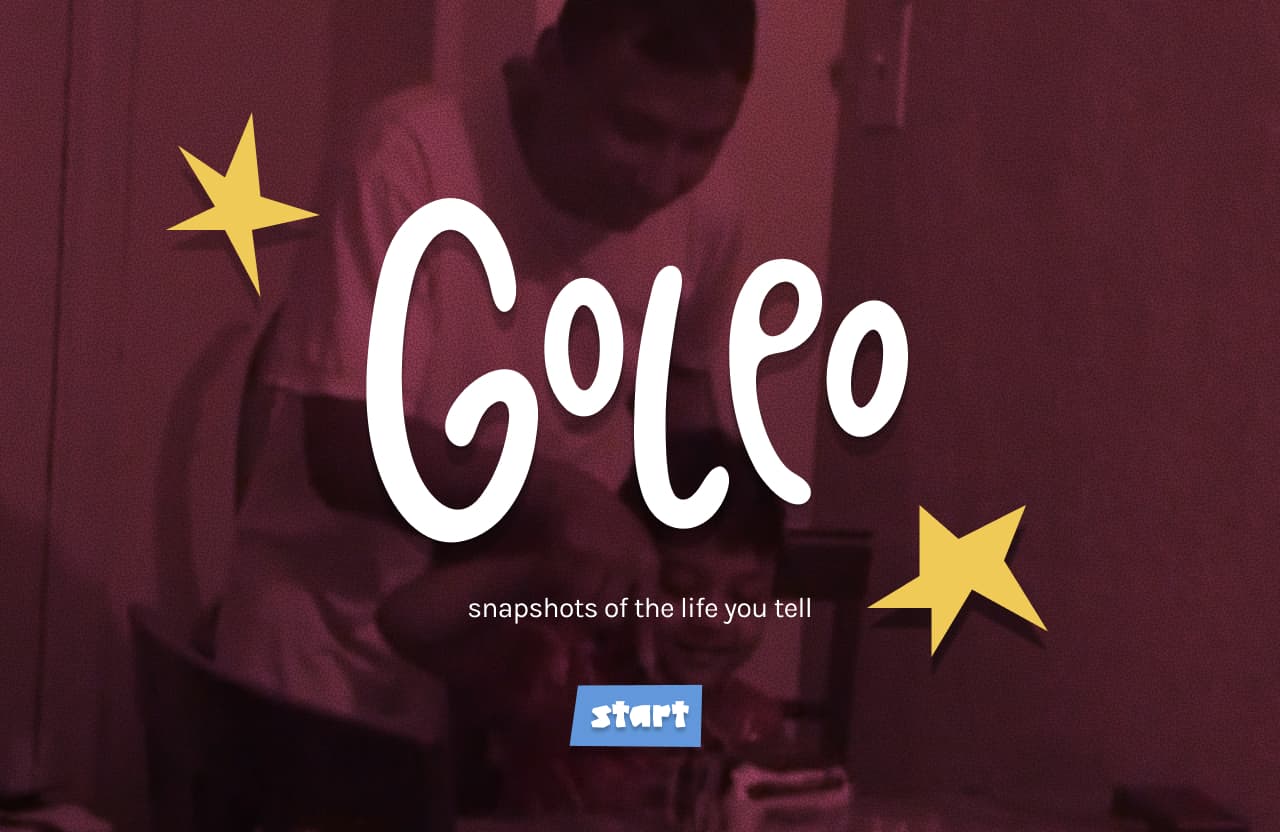
Here are a few screenshots of the photobooth experience.
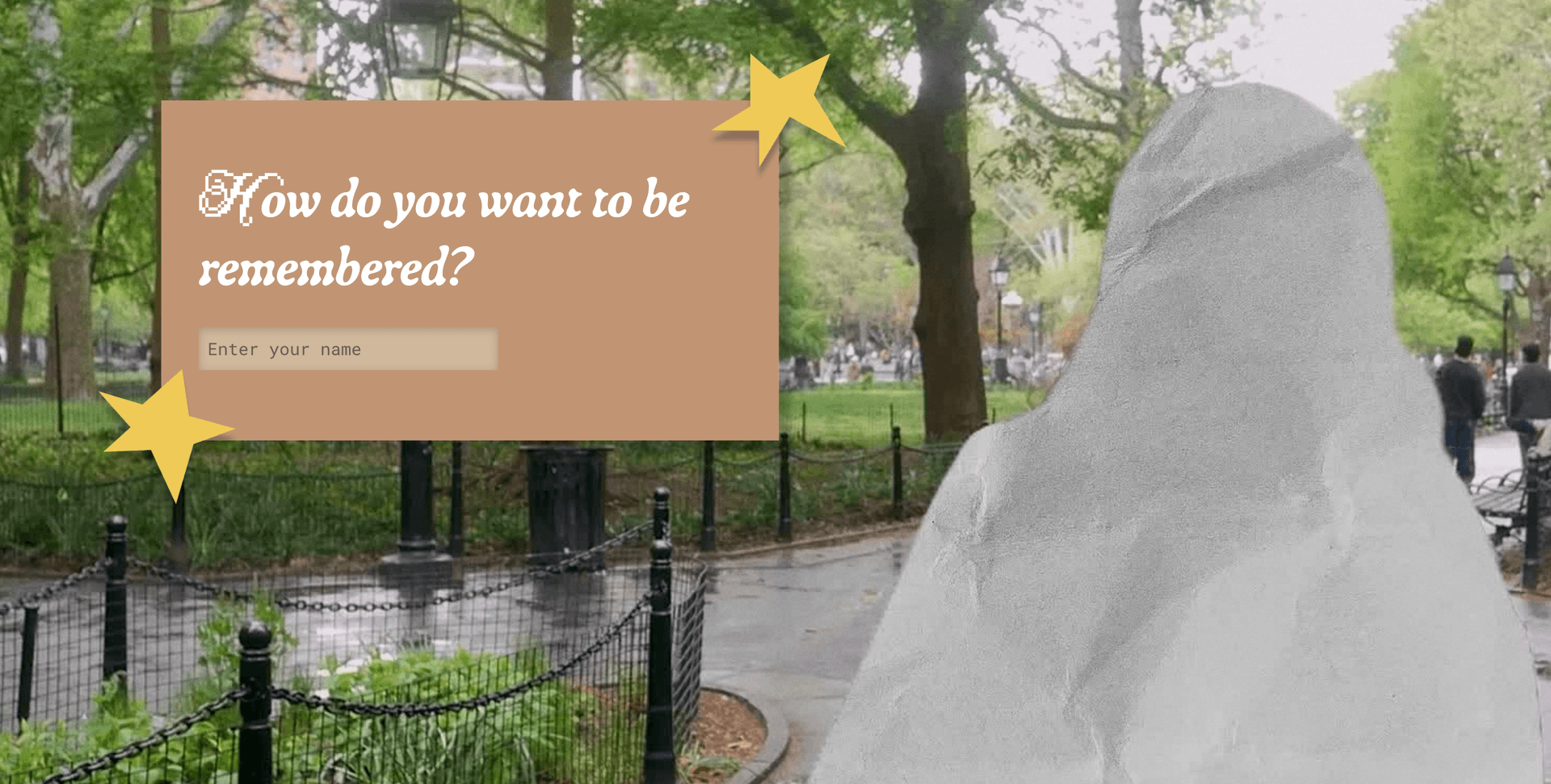
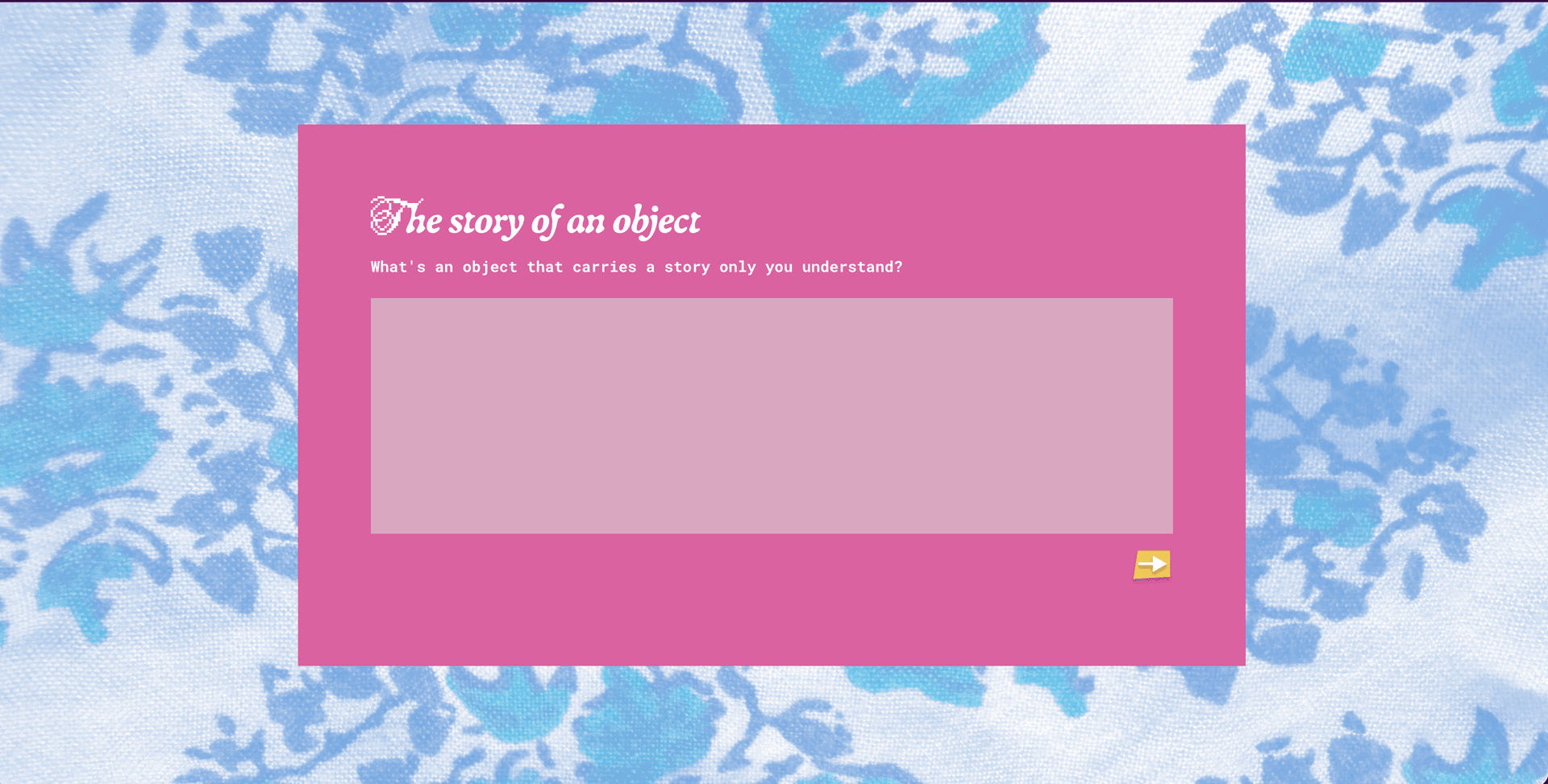
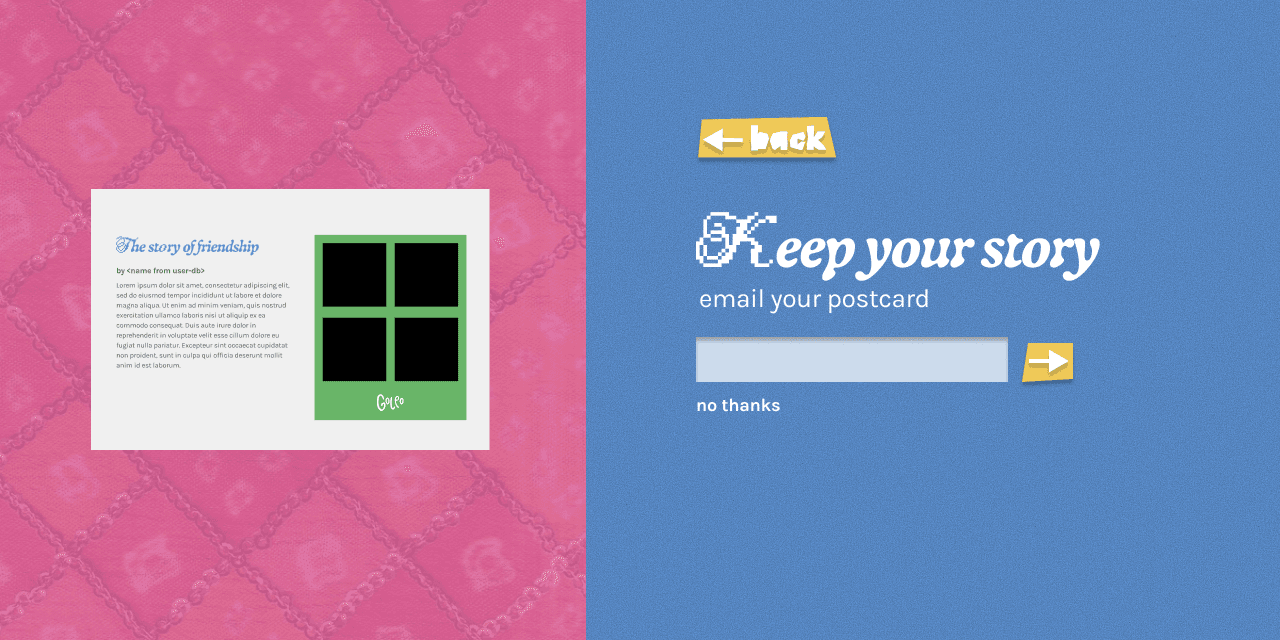
Experience It
The adapted experience is available to try until May 2027.
Reflection
Watching people use Golpo, what struck me most was how many said "I haven't written in a while." The playful, photo-booth framing got them to do something they'd been missing. The gift was offering people a low-stakes prompt to be reflective in a culture that rarely asks. And once written, their stories live on.