Creative Computing Cookbook
K-12 STEM Education
A platform for learning physical computing fundamentals and discovering creative computing projects
Timeline
6 months
Roles
- Product Designer
- Educational Content Creator
- Interviewer
Skills
- UX research
- Prototyping
- Content writing
- Video Editing
Tools
- Figma
- Adobe Premiere Pro
Project Brief
We collaborated with community partners Stem From Dance (SFD) and Community Word Project (CWP) to develop the Creative Computing Cookbook, an online resource hub for middle and high school students. The platform provides foundational content on physical computing components alongside structured breakdowns of past projects, helping novice programmers explore the intersection of art and technology through guided examples.
Considerations
- How can we account for overlapping content and users across partner programs?
Community Word Project
- Works with high schoolers
- Adapted Arduino Nano Every
- Arduino IDE
Stem From Dance
- Works with late elementary and middle schoolers
- Adapted Adafruit Trinket
- Microsoft MakeCode
- How can we support learners in exploring the intersection between dance and technology?
- How can we inspire learners to create unique interactive visual art with physical computing components?
- How can we keep students engaged on the site?
User Research
We worked with 2 small groups of teaching artists from a range of creative disciplines to review lo-fi designs. Across two 60-minute sessions, they navigated the website and shared feedback on the experience, content structure, and how this type of resource could support their teaching practice.
Key Findings
- Teaching artists opted for a robust filtering system that valued both artistic concepts and technical concepts equally.
- Creative examples should have dedicated pages, be clearly broken down, and be featured at the top of the homepage.
- Curricular tags are essential for helping both instructors and students map their learning within the program to classroom curricula
Worked Examples in Creative Computing
The teaching artists’ feedback became a turning point in our design process. Through conversation, it became clear that students needed more than exposure to physical components or polished creative examples, they needed visibility into the process: how ideas were constructed, how decisions were made, and how projects came together step by step. This realization pushed us to rethink the central content of the platform.
We began exploring worked examples as a way to scaffold learning in creative computing. Worked examples—step-by-step demonstrations of expert thinking—are strongly supported by research in Cognitive Load Theory (Ayres & Sweller, 2013; Sweller et al., 2011). They are widely used in mathematics and programming education, but we were curious about how they might translate into creative computing environments—spaces where problems are open-ended and expressive outcomes matter as much as technical precision.
This tension between structure and creativity became central to our inquiry. If worked examples are typically designed for clearly defined problems, how might they function in contexts where ambiguity is part of the learning process? Prior research suggests they can extend into broader design domains (Rourke & Sweller, 2009), yet there is limited exploration of their role in creative computing specifically.
To ground these questions in practice, we conducted a study with dance instructors. Together, we explored how embodied creative processes could be translated into structured examples without reducing their expressive depth. These sessions allowed us to create an archive of worked examples for students to draw inspiration from.
Content Development
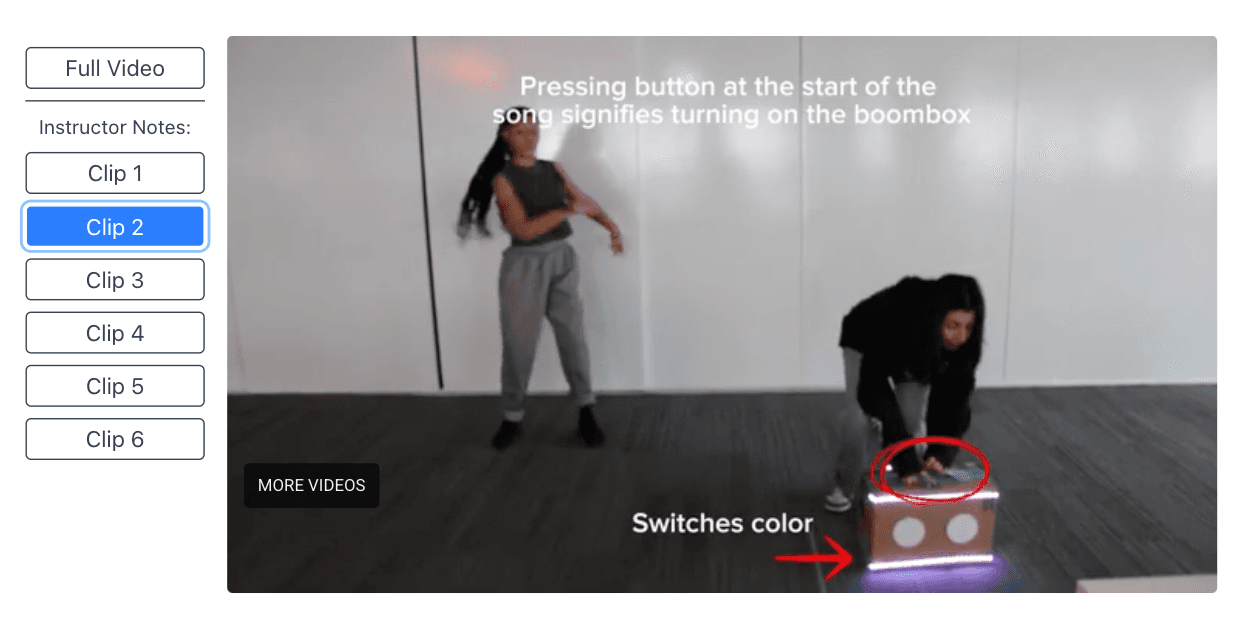
We invited three SFD dance instructors to create short choreographies using LED strips, tilt sensors, and buttons in response to different prompts. Afterward, they annotated their dances, reflecting on their creative decisions, technical choices, and interactions with the electronics.
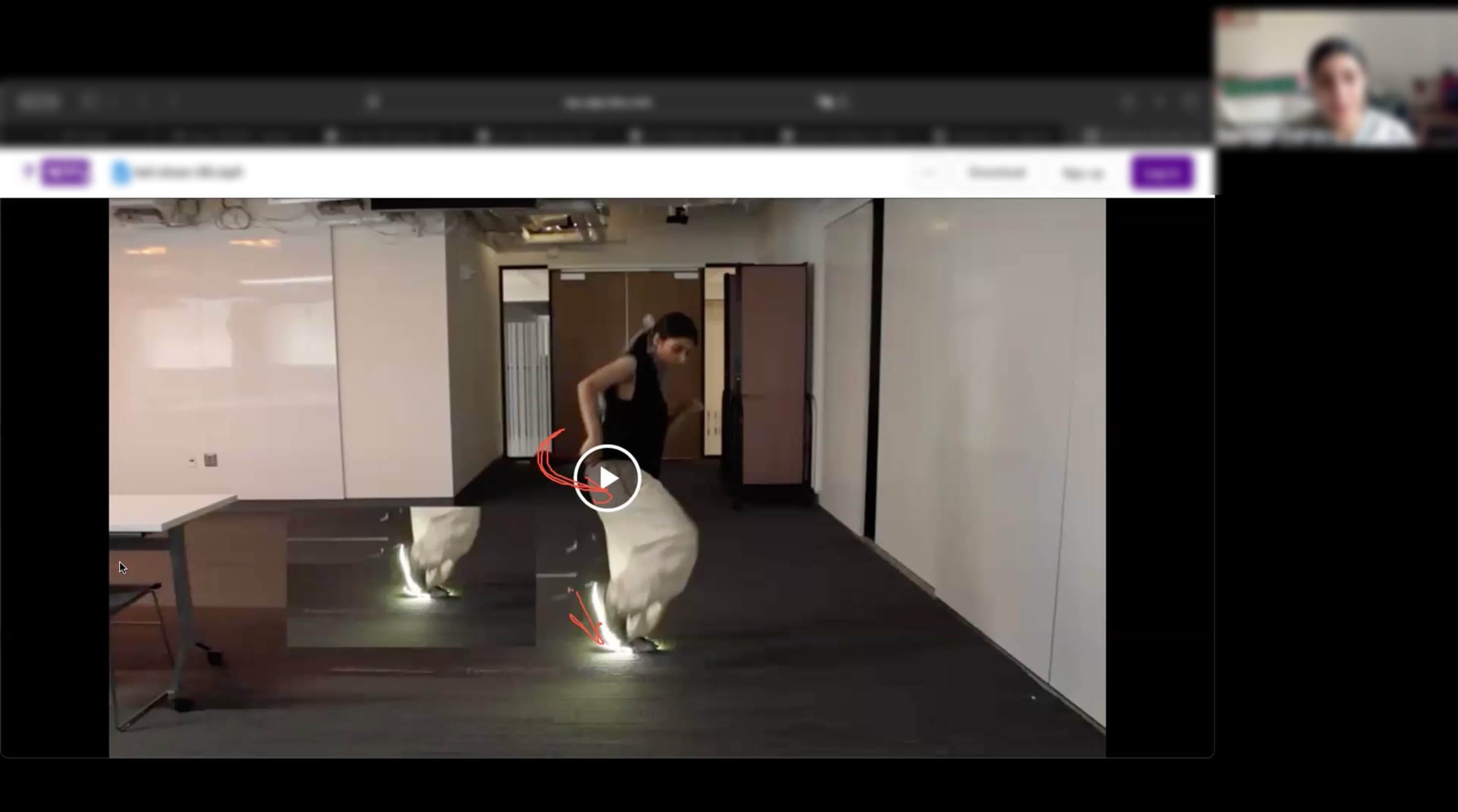
From these sessions, we produced 10 full-length videos and edited them into shorter annotated clips. We then applied the same annotation framework to previous CWP projects to ensure consistency across examples. These structured breakdowns directly informed the design of the beta experience, shaping how creative projects were presented and scaffolded on the platform.
Solution
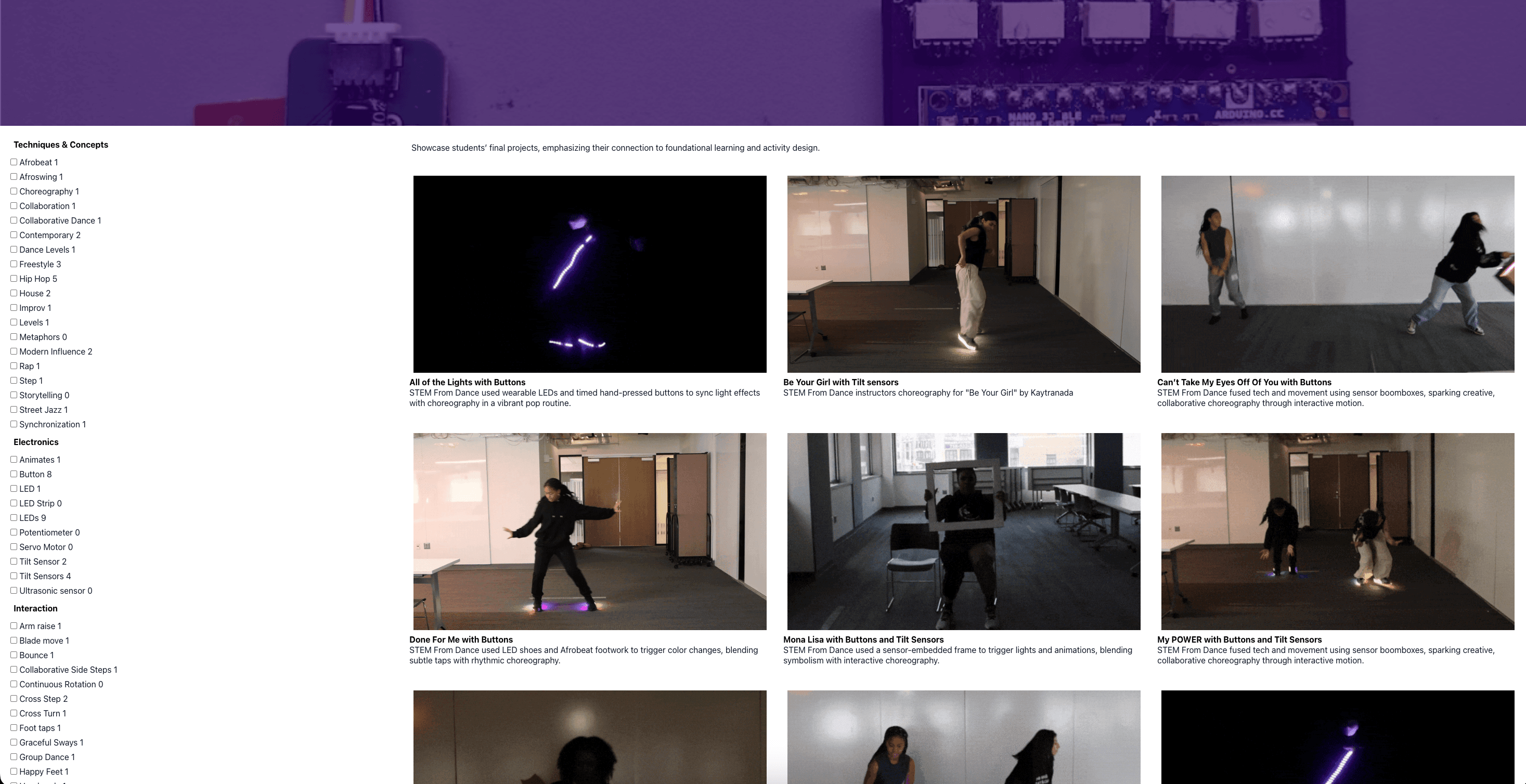
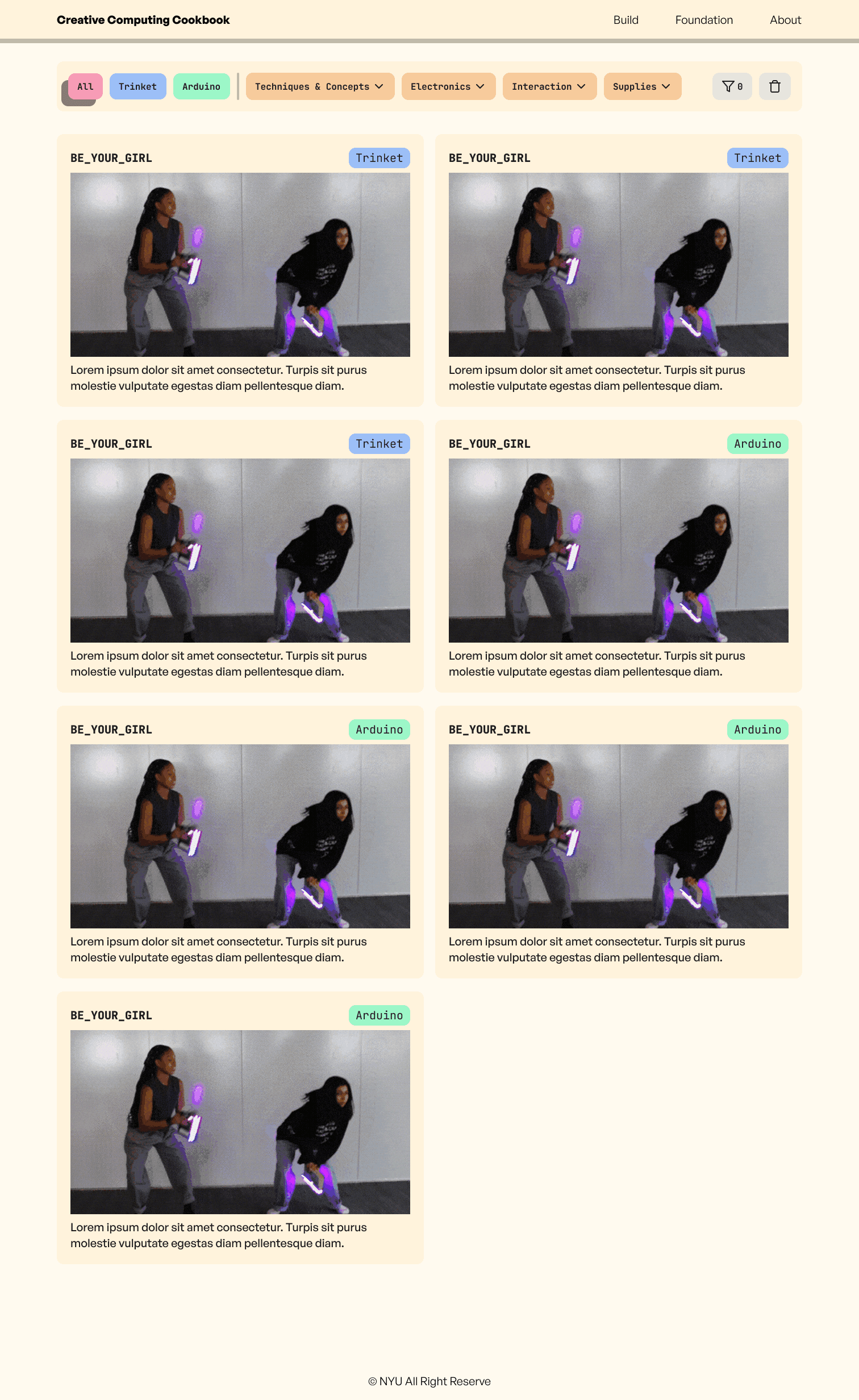
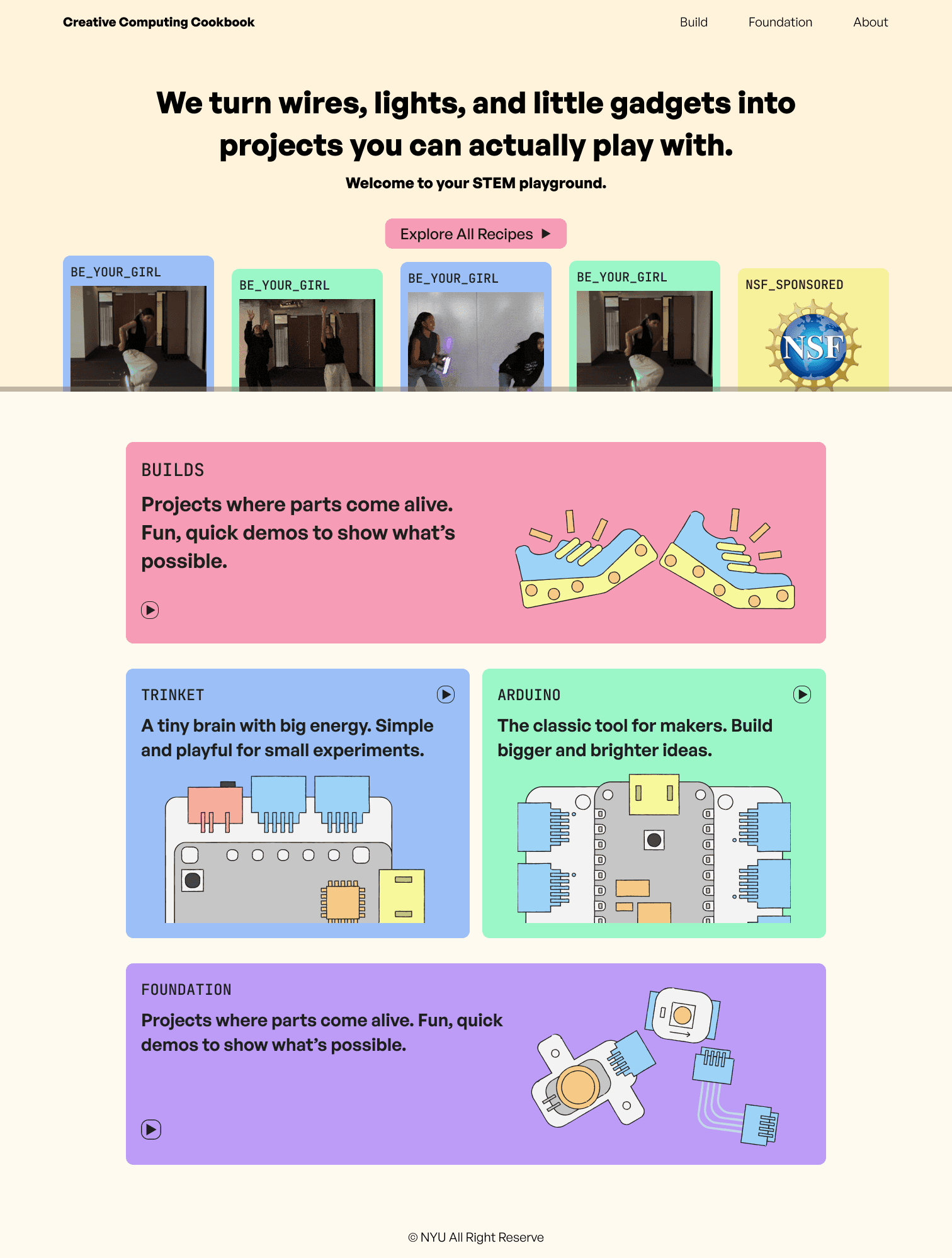
In parallel, the team developed visual design mockups aligned with the refined user flows.
Impact
Students used the website during the 2025 summer iteration of the CWP program to support their first hands-on activity with physical computing electronics.
Next Steps
Develop and implement the new designs, then expand support for user-created content so more community members can contribute projects and learning materials.
References
- Ayres, Paul, and John Sweller. "Worked examples." In International guide to student achievement, pp. 408-410. Routledge, 2013.
- Sweller, J., Ayres, P., & Kalyuga, S. (2011). Cognitive load theory. New York: Springer.
- Rourke, Arianne, and John Sweller. "The worked-example effect using ill-defined problems: Learning to recognise designers' styles." Learning and Instruction 19, no. 2 (2009): 185-199.