ADAPT Accessible Fashion
Co-design adaptive costumes for theater performances
Sew an accessible costume garment for an actor with physical disability
Timeline
10 weeks
Roles
- Product Designer
- Learning Designer
Skills
- Sewing
- Prototyping
- Usability testing
Tools
- Upcycle materials
- Sewable magnets
Overview
A team of three NYU students partnered with ADAPT Community Network to co-design an adaptive theatrical costume for a wheelchair user in the ADAPT Theatre Group.
The project explored how accessibility, sustainability, and expressive design can coexist in performance wear when disabled performers are treated as co-design partners.
The Challenge
Traditional costumes often prioritize aesthetics over accessibility. Our challenge was to design a costume that:
- Enabled independent and comfortable wear
- Supported movement and performance needs
- Reflected the performer's creative vision
- Used sustainable, adaptable materials
Accessibility-Driven Goals
- Practice co-design by centering the performer's lived experience
- Reduce physical and cognitive friction through accessible fasteners
- Design adaptable costume components that can evolve over time
- Show how inclusive design can enhance creativity rather than limit it
My Role
- Accessibility-focused ideation and critique
- Material sourcing with an emphasis on sustainability and comfort
- Prototyping and testing adaptive fastener systems
- Iterative refinement based on performer feedback
Design Process
Research & Listening: We attended live performances and collaborated with the performer and ADAPT staff to understand dressing challenges, performance context, and textile preferences.
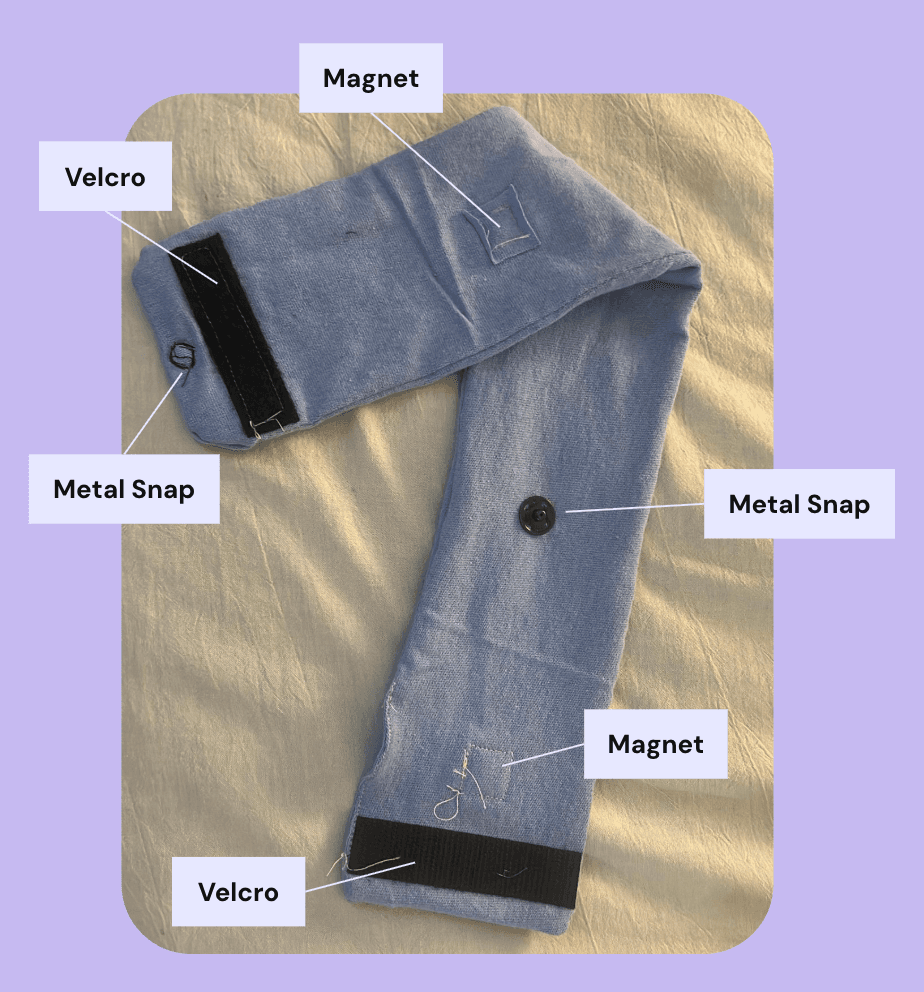
Co-Design & Prototyping: We tested magnets, Velcro, and snaps so the performer could directly evaluate accessibility, comfort, and ease of use.
Sustainable Fabrication: We sourced materials from thrift stores and repurposed garments to reduce waste and support adaptability.
Final Outcome
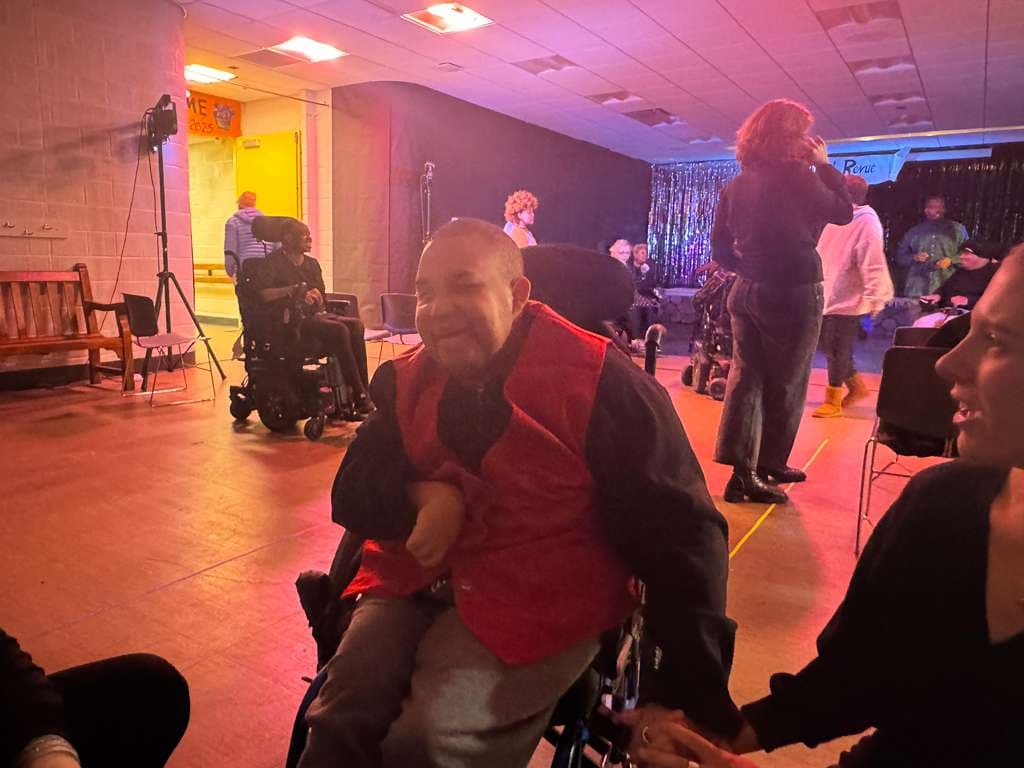
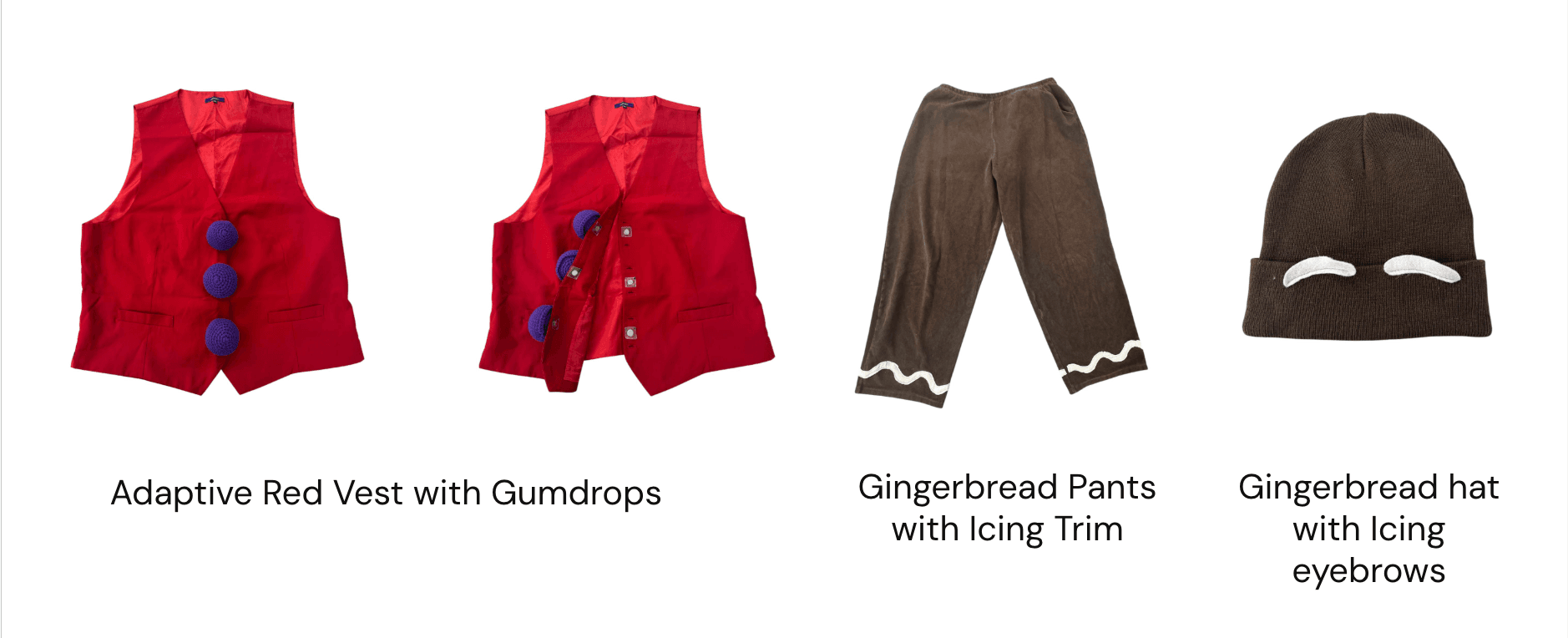
- A red vest with magnetic closures for easier dressing
- Gingerbread-inspired pants with flexible decorative trim
- A theatrical headpiece designed for comfort and expressiveness
The final costume balanced accessibility with playful theatrical aesthetics and reflected the performer's personality and vision.
Impact
- Improved ease of dressing through accessible fasteners
- Strengthened performer agency through co-design
- Demonstrated accessibility as a creative driver
- Established a reusable framework for future ADAPT costume projects
Reflection
This project reinforced that accessibility design is not about retrofitting solutions, it is about designing with people from the start. Centering collaboration and adaptability turned accessibility from a constraint into an expressive design opportunity.